A New Era of Canine Social Spaces
What if a dog park could feel as reliable as your favorite private members club — safe, welcoming, thoughtfully designed, and consistently enjoyable for both dogs and their humans? That vision is exactly what has fueled the rapid emergence of private dog clubs across urban centers.
Over the last decade, a new category of canine social environments has taken shape, blending controlled off‑leash play, hospitality, wellness, and community into curated membership experiences. These clubs are redefining how city dwellers socialize, work, and relax with their dogs — transforming dog ownership from a daily responsibility into a lifestyle ecosystem.
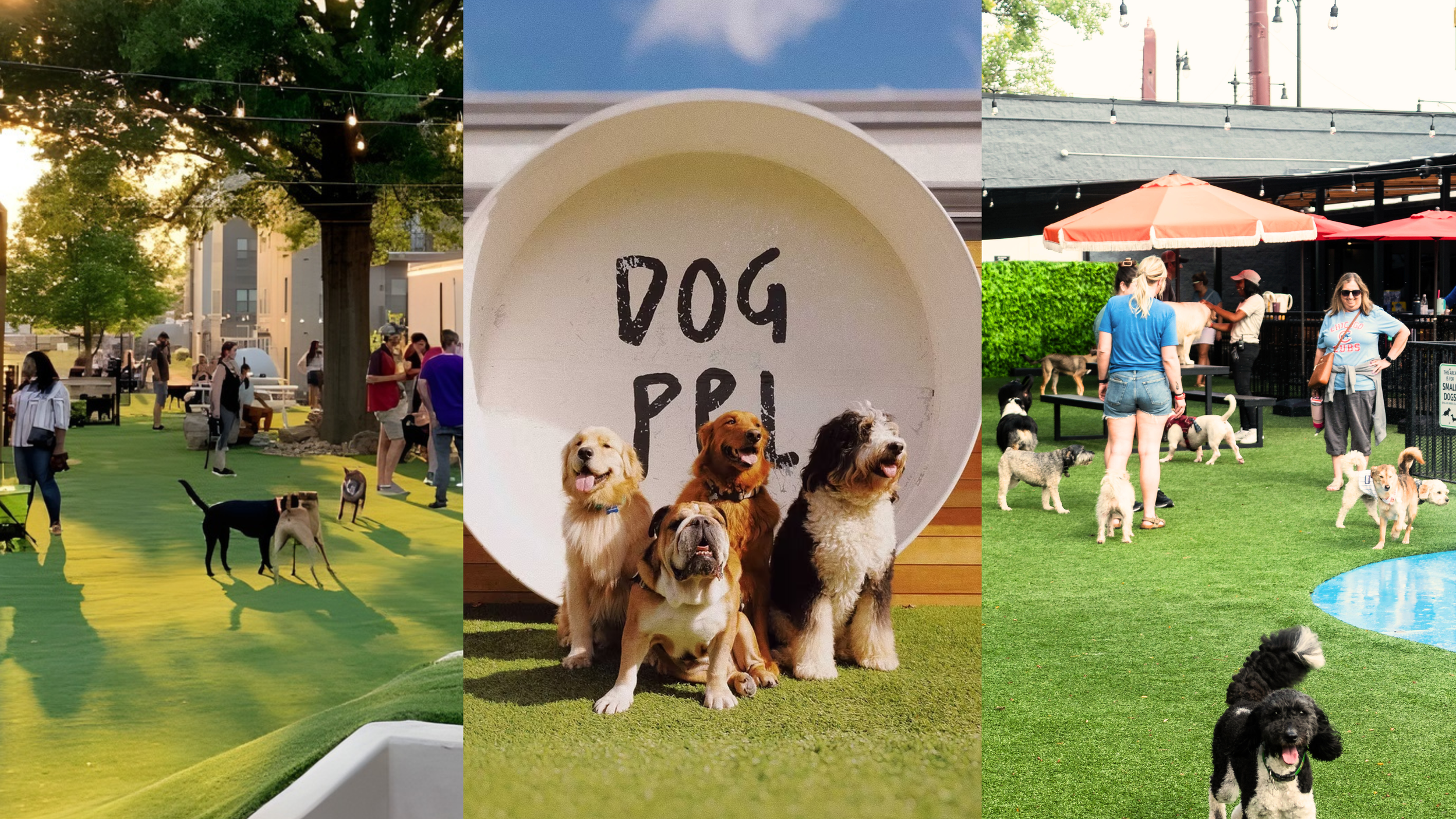
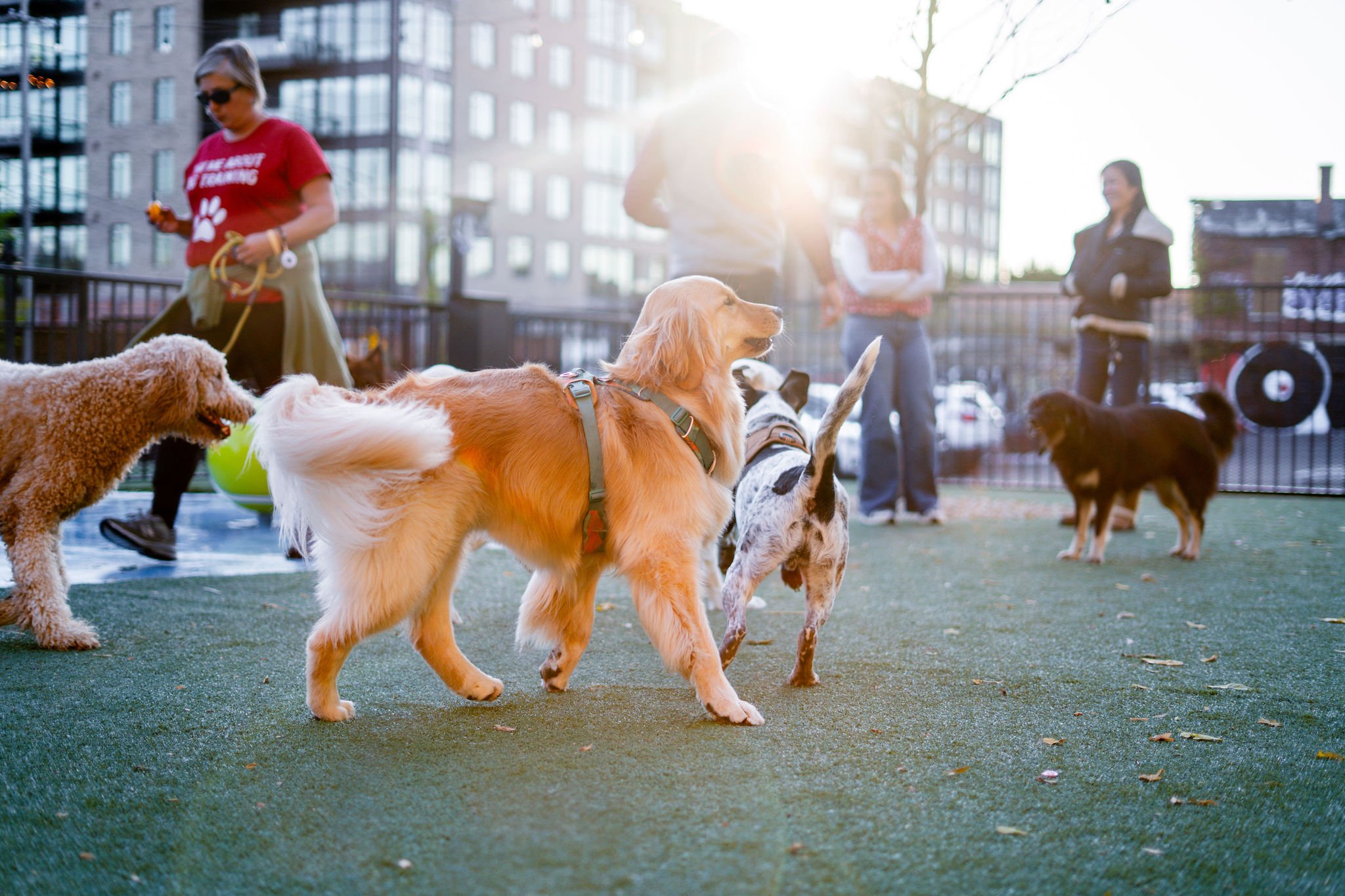
Image credit: Denver Life Magazine — “Skiptown: Hot New Spot for Denver Dog Lovers” (Photo courtesy of Skiptown). Photo courtesy of DOG PPL and Pup Social.
What Are Private Dog Clubs?
Private dog clubs are membership-based dog social spaces that differ fundamentally from public dog parks or dog-friendly bars. Most private dog clubs share several core features:
Controlled access via memberships, RFID cards, or reservations
Behavioral screening and vaccination requirements
Staffed supervision to monitor play and safety
Curated amenities for dogs and humans
The “private” aspect is central. Membership creates accountability, consistency, and predictability—elements often missing from public dog parks.
By contrast, public parks are open-access and typically unsupervised, while dog-friendly bars prioritize human hospitality with dogs as secondary participants.
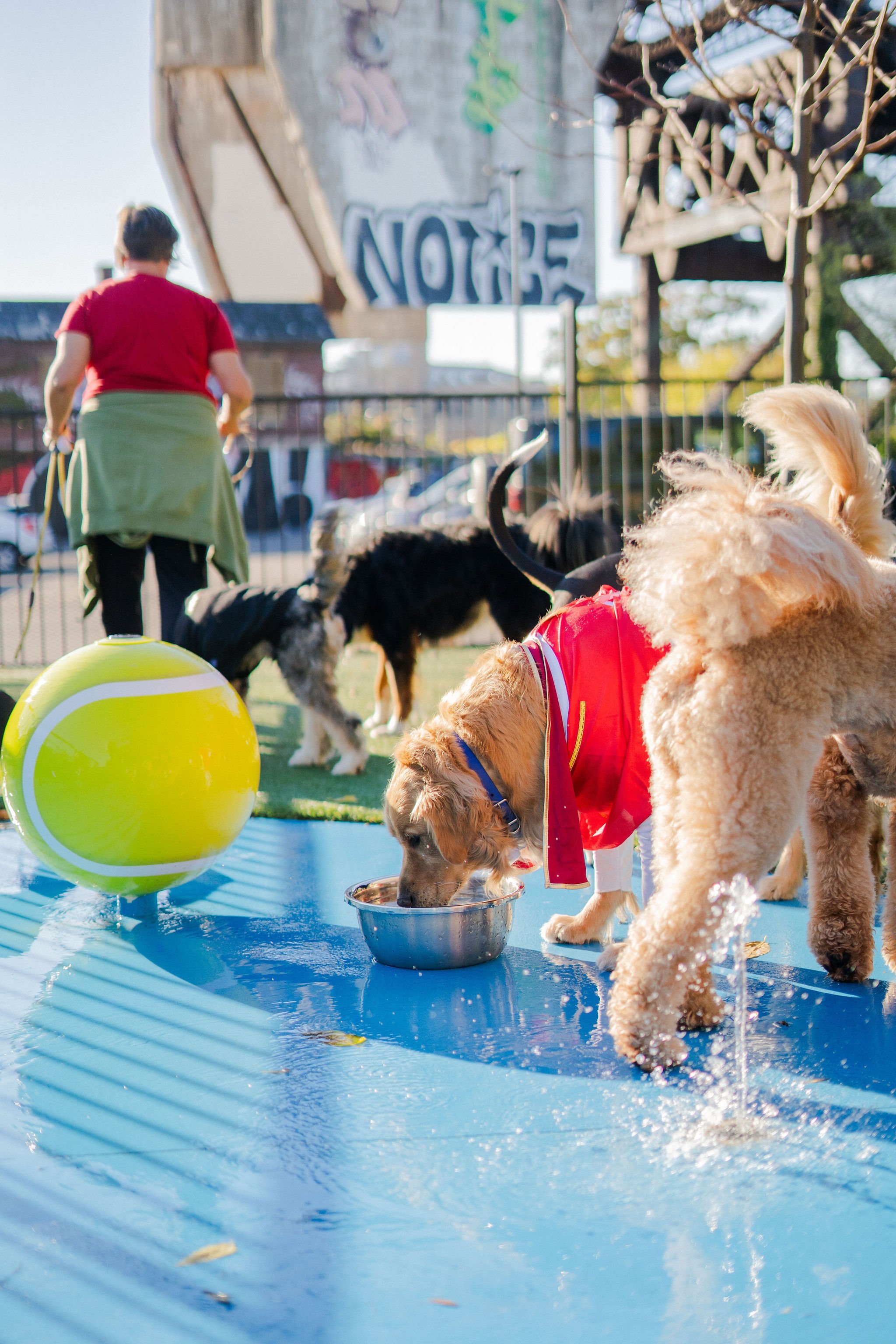
How the Private Dog Club Concept Emerged
The private dog club did not appear fully formed. Instead, it evolved gradually—shaped by urbanization, changing work patterns, and a growing expectation that dogs should be integrated into everyday life rather than accommodated as an afterthought.
From Public Dog Parks to Social Spaces
The foundation of today’s private dog clubs can be traced back to the rise of public off-leash dog parks in the late 20th century. As American cities became denser and private yards less common, designated dog parks emerged as essential urban infrastructure. One of the earliest and most frequently cited examples is Ohlone Dog Park in Berkeley, established in 1979 and often referenced as the first formal dog park in the United States.
These early parks were designed for function, not experience. Their purpose was to provide space for exercise and compliance with leash laws—not curated social environments or amenities for humans.
Over time, however, dog parks naturally became social gathering points. Regular visitors formed informal communities, laying the groundwork for the idea that dogs could anchor broader social interaction.
The Hospitality Experiment
In the 2000s and early 2010s, this informal social layer evolved into experimentation. Breweries, food trucks, and pop-up beer gardens began welcoming dogs or setting up adjacent to off-leash areas.
These concepts proved that dog-centered spaces could drive human traffic and community—but they were often open-access, lightly regulated, and dependent on novelty rather than structure. As they scaled, safety, crowding, and consistency became challenges.
The Shift to Membership-Based Clubs
By the mid-to-late 2010s, a new generation of operators began formalizing these experiments into structured, membership-based environments—marking the emergence of the private dog club as a distinct category.
These clubs introduced:
· Controlled access through memberships or reservations
· Vaccination and behavior screening
· Staffed supervision
· Capacity management
· Curated amenities for both dogs and humans
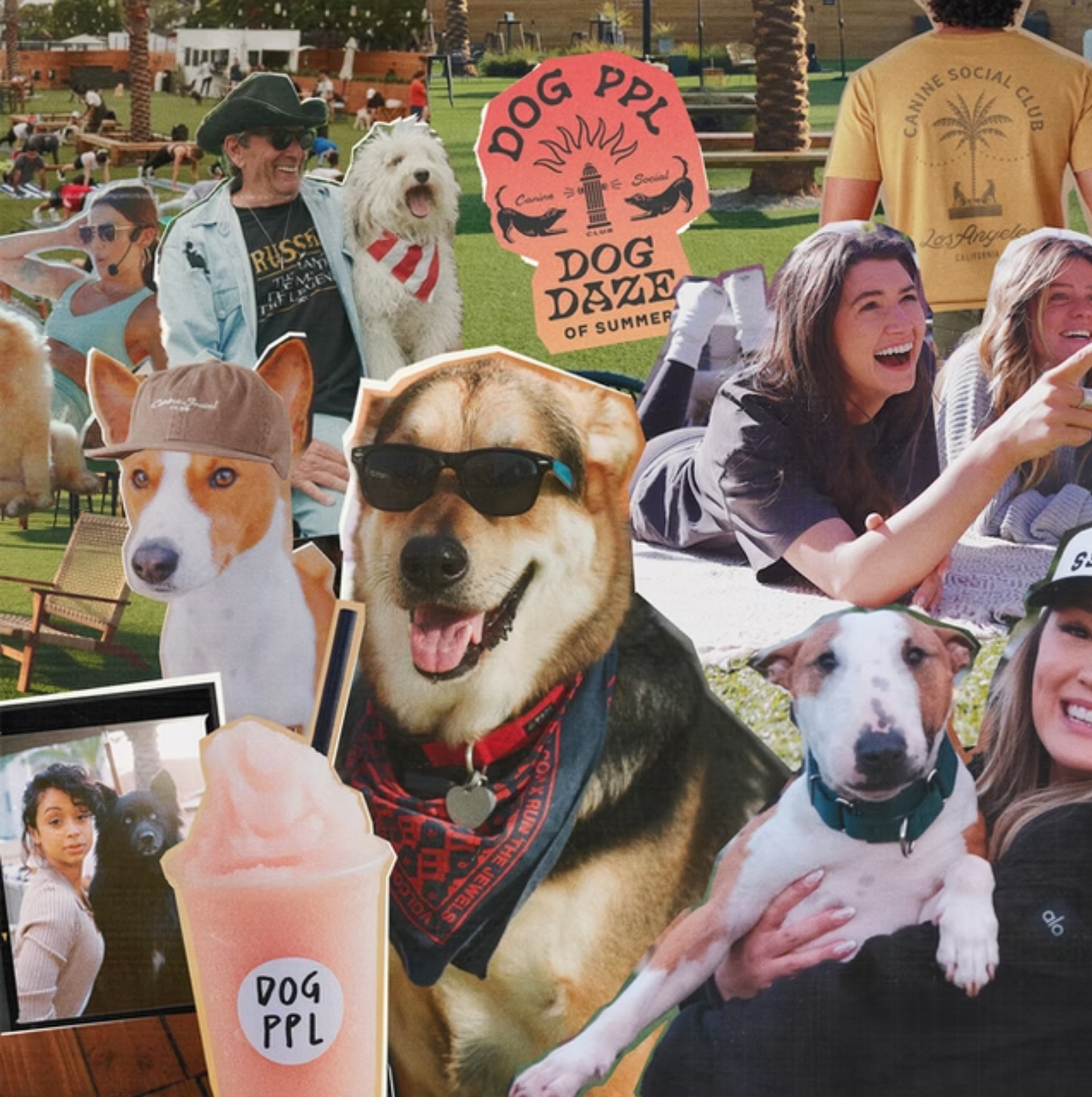
This shift reflected a growing understanding that predictability, safety, and accountability were essential for sustainability. Coverage of behavior-first concepts like Dog PPL in Los Angeles illustrates how structure—not just space—became central to the model.
Macro Forces That Accelerated Growth
Several broader trends pushed private dog clubs from niche to mainstream:
Urban density: As cities continued to densify, demand grew for reliable, nearby off-leash environments.
Pet humanization: Dogs increasingly came to be viewed as family members, driving spending on premium care and experiences. The American Pet Products Association reports that U.S. pet industry spending now exceeds $140 billion annually, with services among the fastest-growing segments.
Remote and hybrid work: Flexible work schedules increased demand for “third places” where dog owners could combine work, supervision, and social interaction.
Expansion of premium pet services: Boutique daycare, training, and enrichment services normalized higher-touch, paid dog care—making membership-based clubs feel like a natural extension.
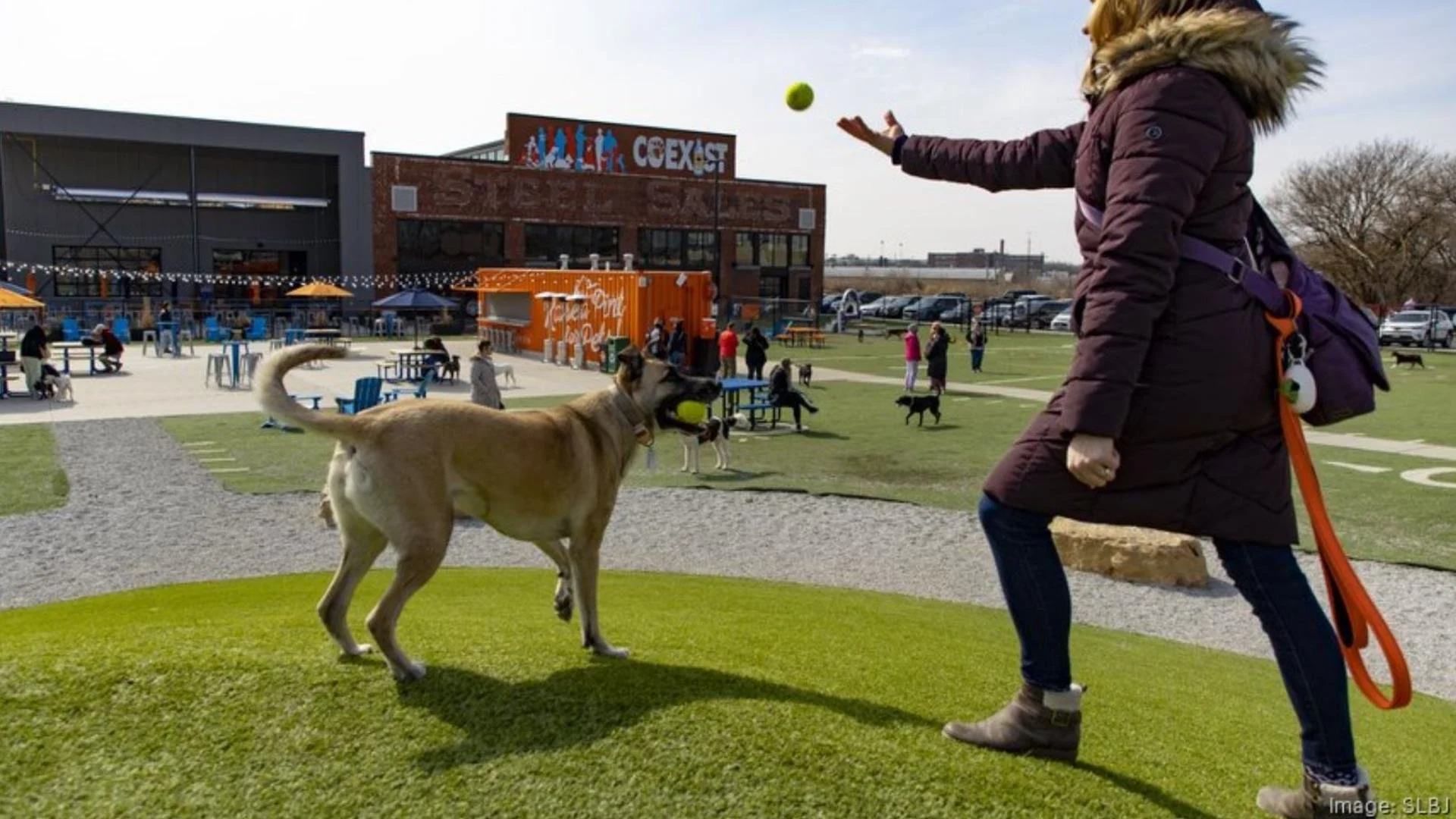
Image credit: St. Louis Business Journal — “Bar K closes doors as popular dog bar files for Chapter 7 bankruptcy” by Leslie Collins. Photo by DJ Visions / SLBJ.
Learning From What Didn’t Work
As the category evolved, early closures also helped clarify what doesn’t work. Hospitality-heavy dog park concepts proved that dogs could anchor social spaces, but they also exposed structural limitations. For example, Bar K’s closure and Chapter 7 bankruptcy filing underscored the financial strain of large footprints, food-and-beverage operations, and labor-intensive models.
Open or lightly gated access further introduced safety and consistency challenges, making it difficult to deliver predictable experiences at scale. In many early models, hospitality took precedence over canine welfare, creating tension between crowd dynamics, alcohol service, and responsible dog management.
These lessons shaped the next generation of private dog clubs—where controlled access, behavior screening, and safety-first systems are foundational rather than optional. Rather than weakening the category, early missteps helped refine it, paving the way for more sustainable, trust-driven models.
Major Players Shaping the Private Dog Club Market
A growing number of operators are actively defining what a “private dog club” can be—across regions, price points, and philosophies. Rather than a single dominant model, the category is being shaped by a mix of hospitality brands, behavior-led clubs, and hybrid social spaces that blur the line between dog park, lounge, and lifestyle membership.
Skiptown — Hospitality-Forward Hybrid Model
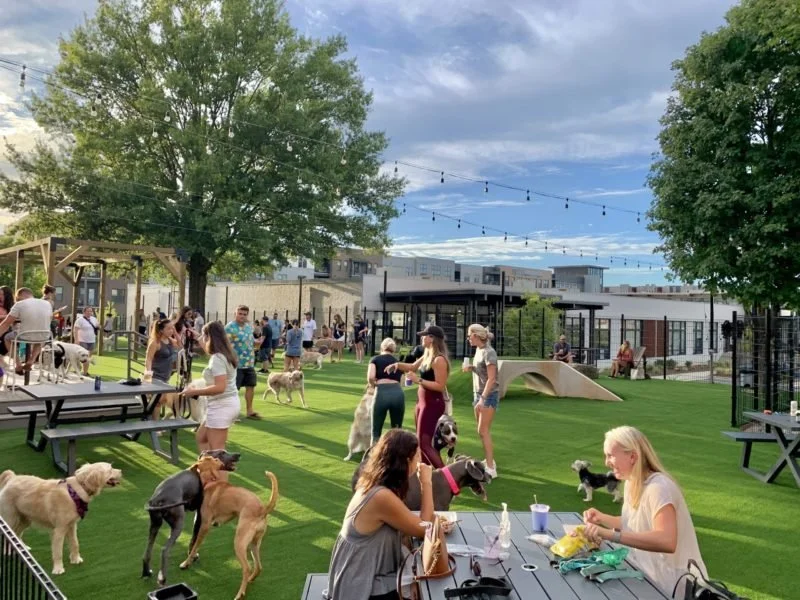
Photo courtesy: Skiptown
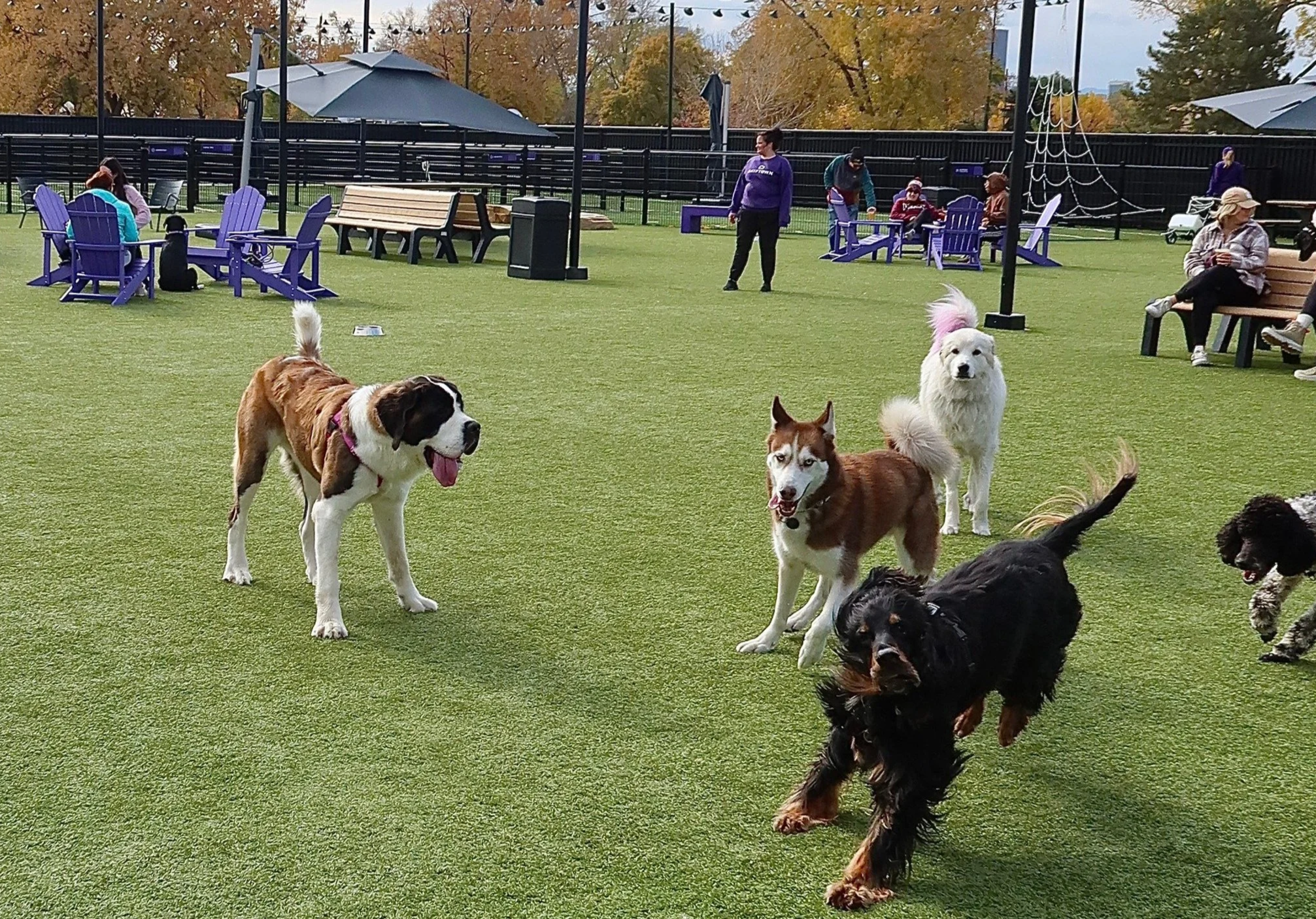
Photo courtesy: Skiptown
Skiptown represents the large-format, hospitality-forward end of the market, combining expansive off-leash play areas with bars, food service, and event programming. In an article by Jamie Lynn Miller, Skiptown’s RiNo location is described as an “urban playground for pups and their people”, emphasizing its social design and destination-style appeal. Additional reporting by Kristal Dixon describes Skiptown as a “bougie dog park” entering Kirkwood, reinforcing its premium, lifestyle-led positioning.
Skiptown operates as a hybrid of traditional pet care services (daycare and boarding) combined with a dog park–bar experience. This hybrid structure reflects the realities of urban real estate: large-format dog play spaces often require diversified revenue streams to remain viable.
Joining requirements:
Dogs must be registered in the Skiptown app before entry
Vaccination records (rabies, bordetella, distemper/parvo) must be uploaded and verified
Dogs must meet age and spay/neuter requirements
Day passes are available — a paid monthly membership is not required for park access
A “Compatibility Day” evaluation exists for daycare/boarding, but no formal temperament test is required for dog park entry
Key takeaway: Skiptown regulates vaccines and basic eligibility but maintains open-access hospitality-style park entry rather than controlled private-club membership.
Dog PPL - Behavior-First Private Membership Club
Dog PPL is widely cited as a members-only, behavior-first canine social club. Writing for a national lifestyle outlet, Avery Stone characterizes DOG PPL as “the members-only dog park where Hollywood elites sniff each other out”, highlighting its curated membership, screening standards, and private-club atmosphere for both dogs and their owners.
Joining requirements:
Paid membership required for regular access
Verified vaccination records
Spay/neuter requirements for eligible dogs
Mandatory social evaluation by an in-house canine safety team before membership is finalized
Ongoing vaccine tracking and renewal compliance
Key takeaway: DOG PPL operates closest to a traditional private members club — emphasizing screening, predictability, and controlled social environments.
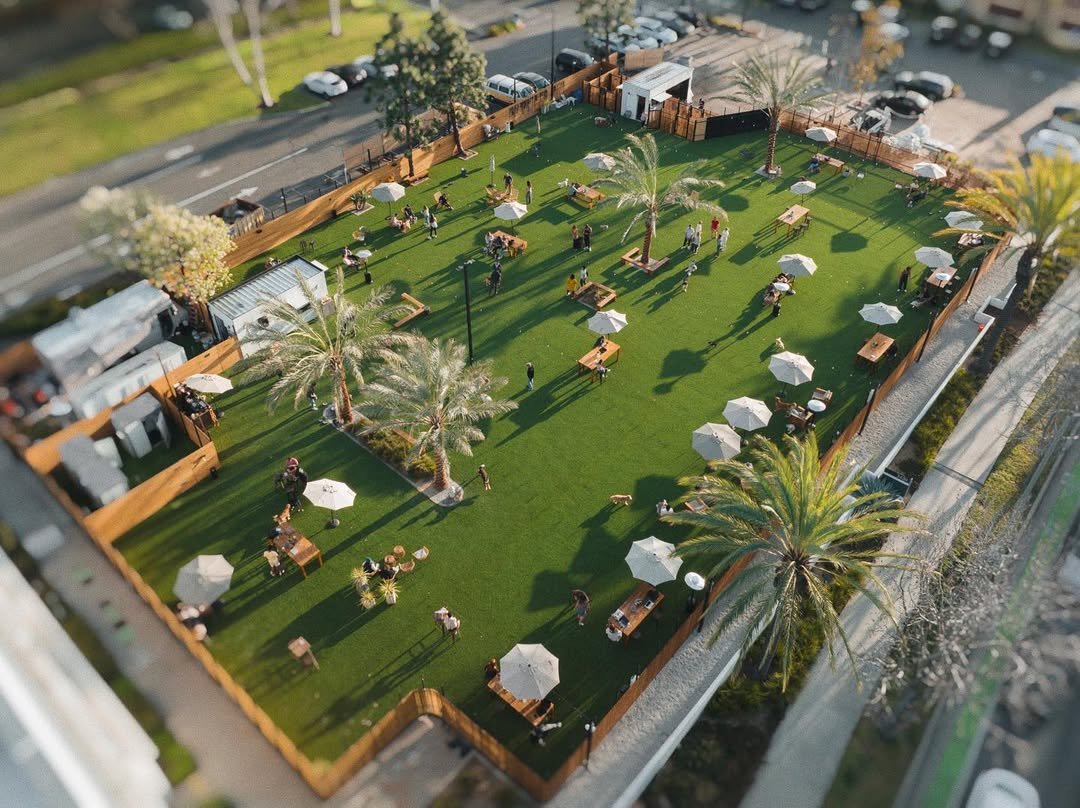
Photo via @dogppl (Instagram)
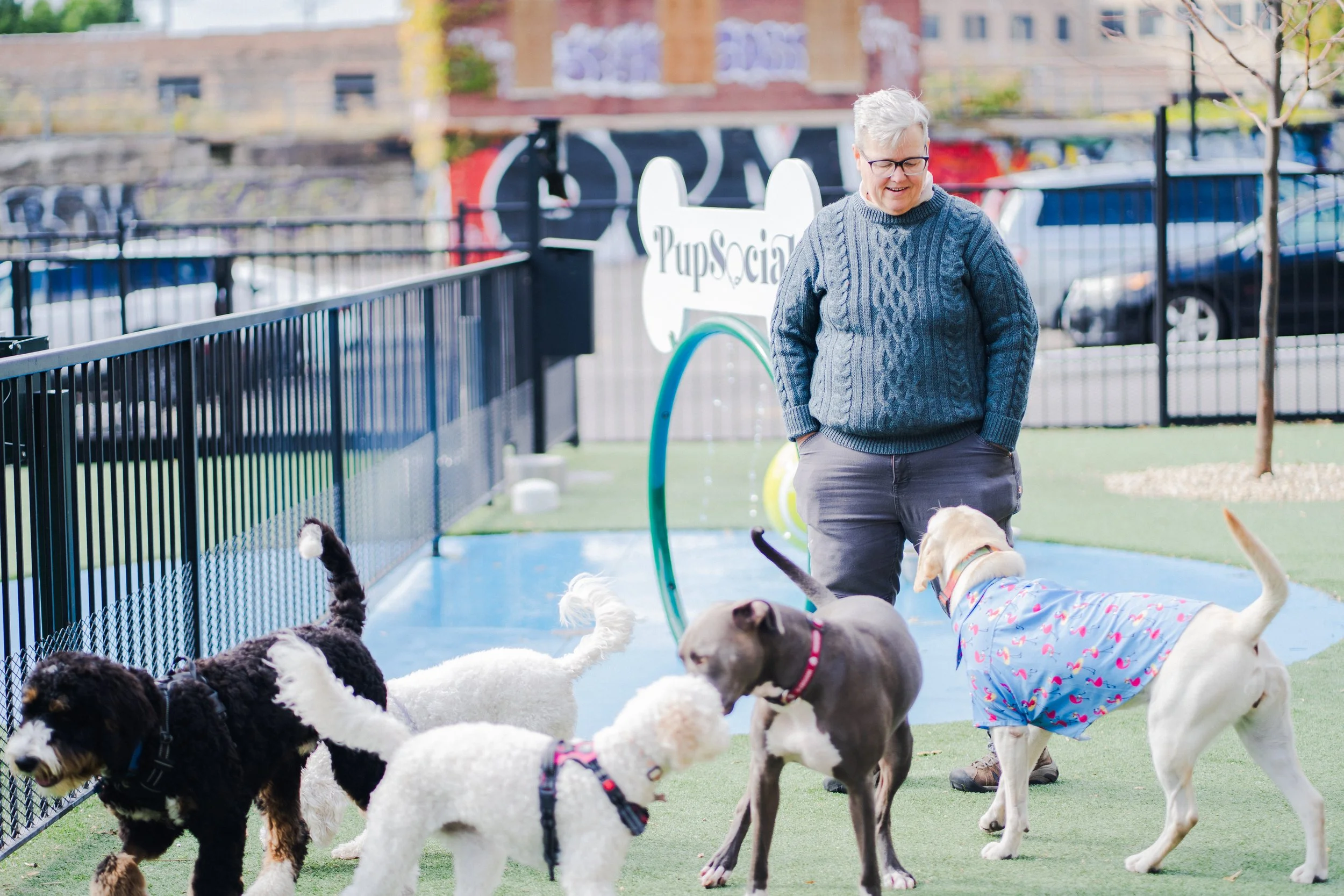
Pup Social
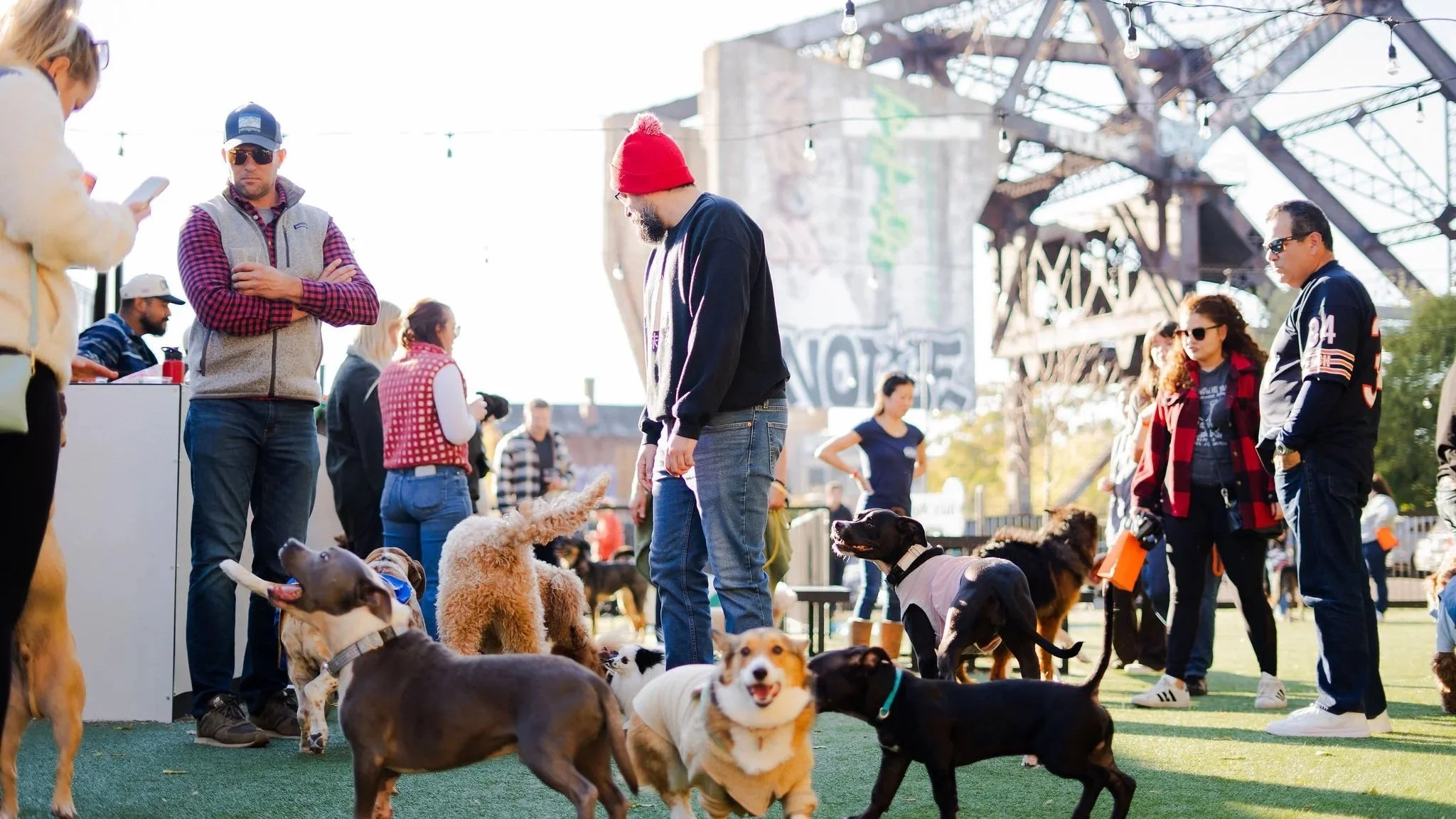
Pup Social introduces a multi-use private club model integrating supervised off-leash play with coworking lounges, grooming, and spa-style amenities. In reporting by Mariah Rush, Pup Social is described as a members-only club for dog owners opening in Bucktown, created to serve both dogs and humans in one cohesive environment. Complementary coverage by Jack Grieve further frames the concept as a new members-only dog park offering booze and blowouts for humans, underscoring its hybrid positioning between hospitality, wellness, and pet care.
Verified vaccination compliance
Mandatory Social Test & Temperament Assessment during the first visit
Supervised off-leash play environment
Membership and service-based access options depending on activity type
Key takeaway: By requiring both vaccine compliance and temperament assessment before group play, Pup Social establishes a higher accountability and safety standard — positioning itself as a true private club rather than a hospitality-led dog park.
Fetch — Neighborhood Social Dog Park Model
Fetch operates social dog parks that blend off-leash play with food, drinks, and sports-bar-style social spaces. In coverage by 6abc Digital Staff, Fetch Park is described as bringing dog-friendly sports-bar vibes to Manayunk, emphasizing its accessible, community-driven model. Additional reporting by Cherise Lynch notes that Fetch Park officially opened its dog-friendly bar concept in Philadelphia’s Manayunk neighborhood, positioning it as a neighborhood social hub rather than an exclusive private club.
Joining characteristics (based on publicly available policies and historical operations):
No required paid membership for park entry
Historically minimal or inconsistent vaccine verification
No published formal temperament or social screening process
Walk-in, open-access visitation model
Key takeaway: Fetch functions closer to a dog-friendly hospitality venue than a private dog club, with lower access control and minimal behavioral gatekeeping.
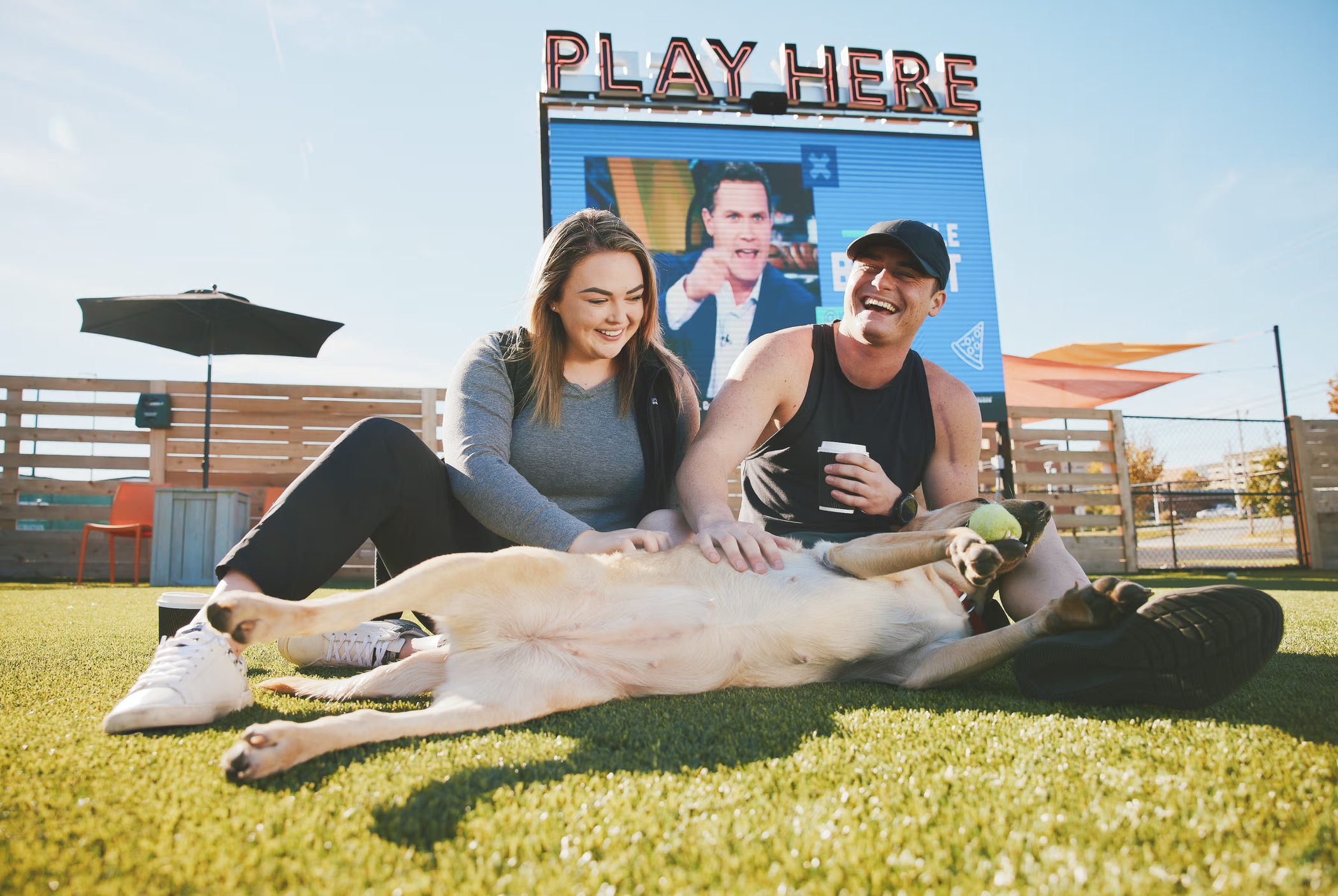
Photo courtesy of Fetch Park
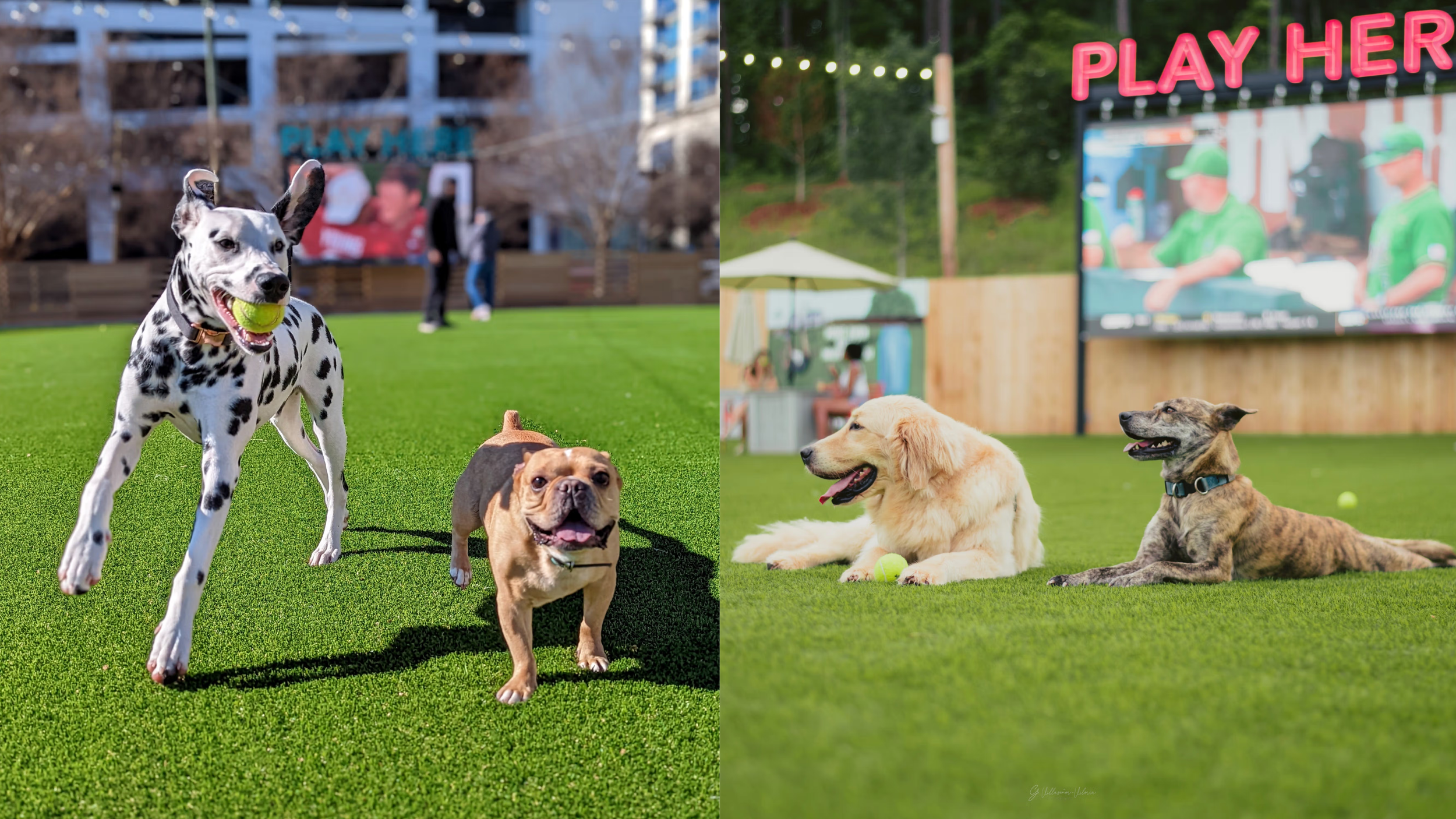
Photo courtesy of Fetch Park
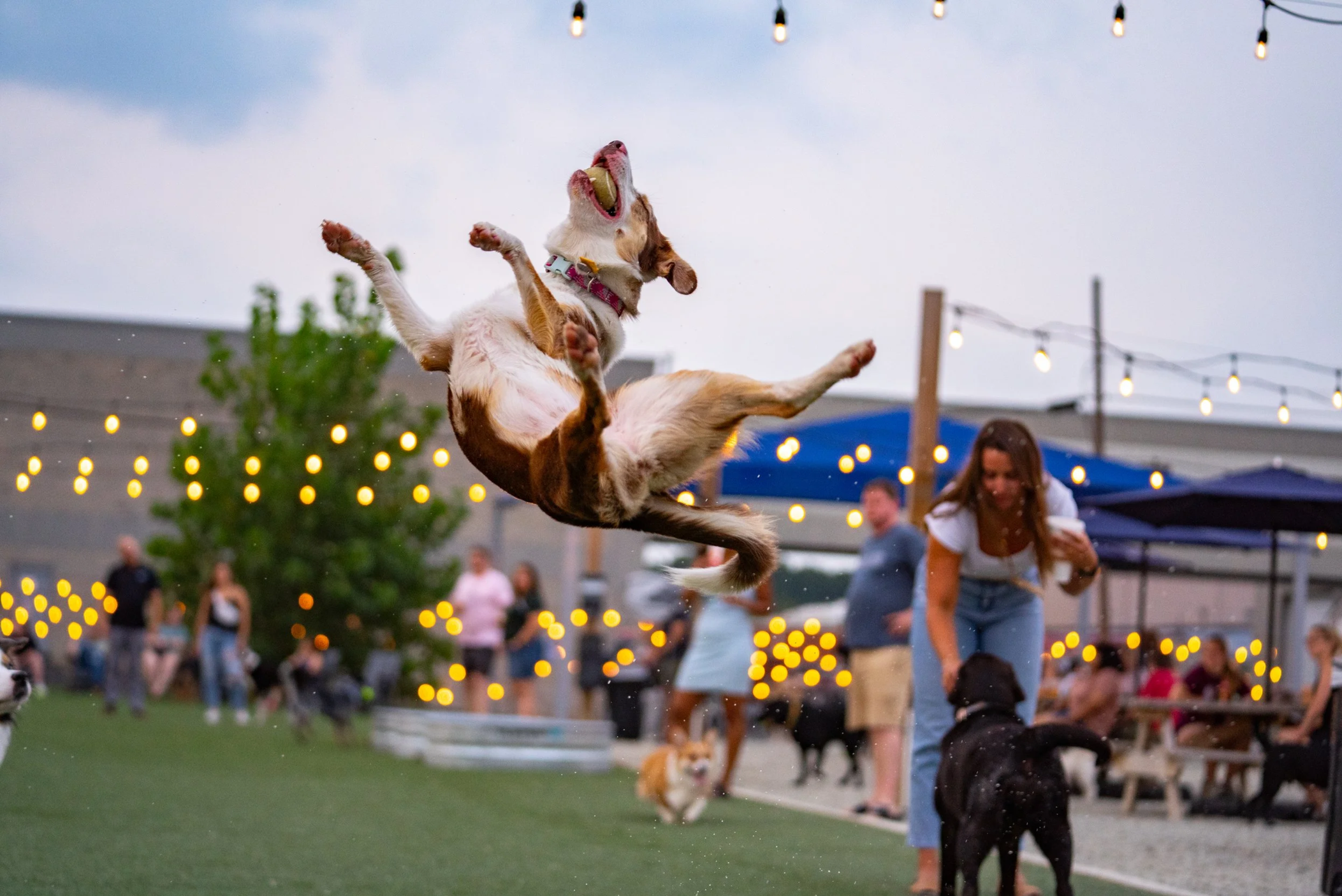
Photo Courtesy of Ruff Canine Club
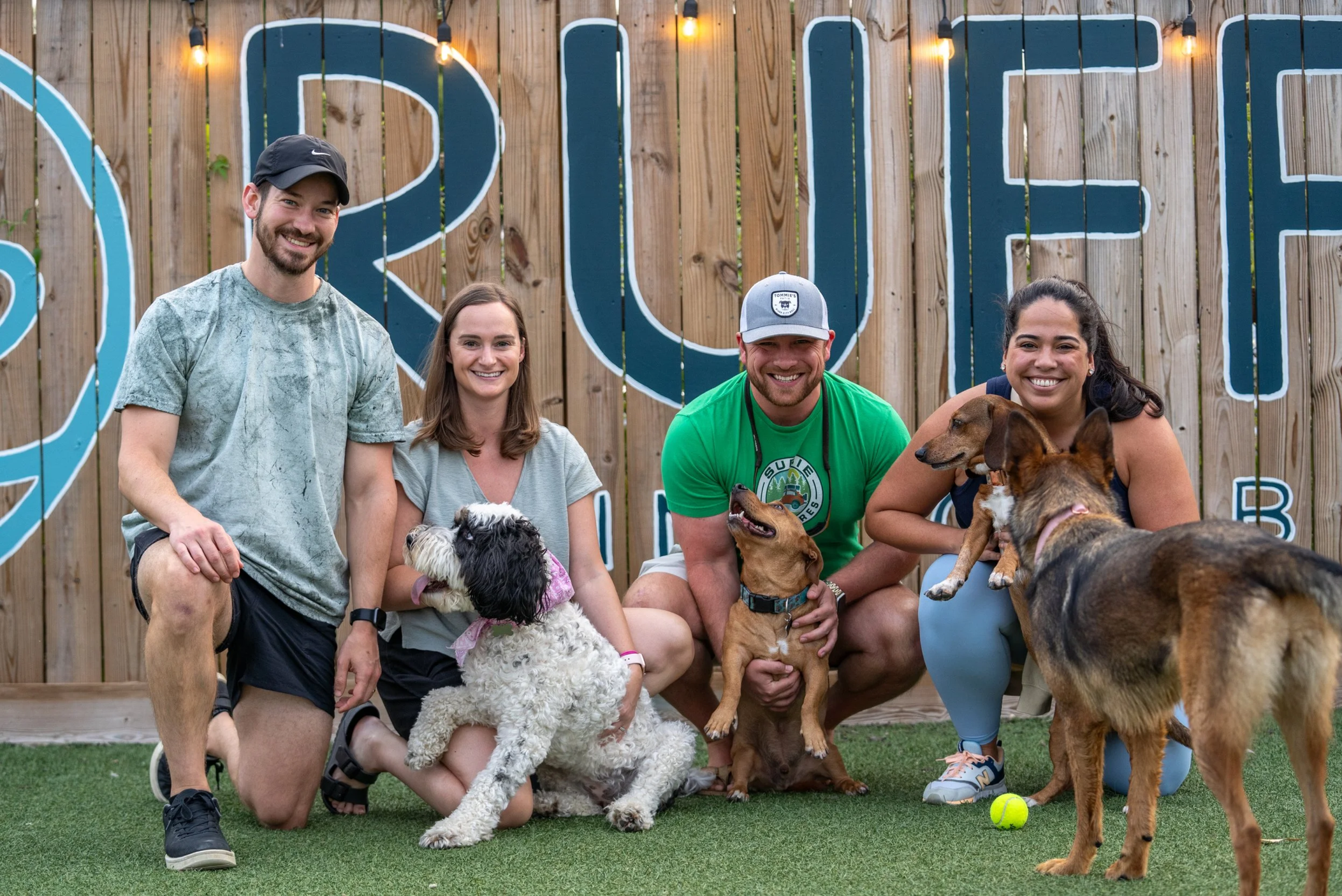
Photo Courtesy of Ruff Canine Club
Ruff Canine Club
Ruff Canine Club is a hospitality-forward dog park and social space that blends off-leash play with food and beverage service, positioning it squarely within the modern dog-park-plus-hospitality category. In reporting by Terrance Dixon, Ruff Canine Club is described as Richmond’s first dog park with a walk-up bar, highlighting its combination of supervised dog play and an on-site bar designed for owners to socialize while their dogs roam off-leash. More recently, Karri Peifer writes that Ruff Canine Club upgrades Richmond’s dog park game with a members-only dog park and bar, emphasizing its membership model, curated environment, and role in redefining how urban dog parks function as social destinations
Joining requirements:
Pet profile creation and vaccination uploads required before entry
Rabies, bordetella, and distemper/parvo vaccines required
Age and spay/neuter policies enforced
Day passes available — monthly membership not required for single visits
No formal published temperament or behavioral screening process
Key takeaway: Ruff balances hospitality and controlled eligibility but remains primarily destination-driven rather than behavior-first.
Membership Models & Ways to Access Private Dog Clubs
Private dog clubs generally operate under one of three access models, each designed to balance safety, experience quality, and community-building.
Monthly or Annual Memberships
This is the core model for true private dog clubs. By requiring an ongoing commitment, clubs can better regulate attendance, screen dogs consistently, and foster familiar social dynamics among both pets and owners. Membership-based access has been shown to support lower incident rates, improved behavioral monitoring, and stronger member accountability—key factors in maintaining safe off-leash environments. For operators, predictable membership revenue also enables better staffing, training, and facility upkeep.
Hybrid Models (Members + Limited Day Passes)
Hybrid access combines memberships with restricted day passes, often used by hospitality-driven dog parks and dog-bar concepts. While this increases accessibility and revenue, capacity caps and clear rules are essential. When managed correctly, hybrid models allow first-time visitors to trial the experience without significantly disrupting community norms. Poorly controlled hybrid access, however, has been linked to higher crowd volatility and inconsistent dog behavior due to unfamiliar participants.
Reservation-Based Access
Reservation systems rely on time-slot control to manage density and dog-to-dog interactions. This model is especially effective in urban environments where space is limited. By smoothing peak hours and limiting overcrowding, reservation-based access reduces stress triggers, improves supervision ratios, and enhances overall safety outcomes.
Why Screening and Controlled Access Matter in Private Dog Clubs
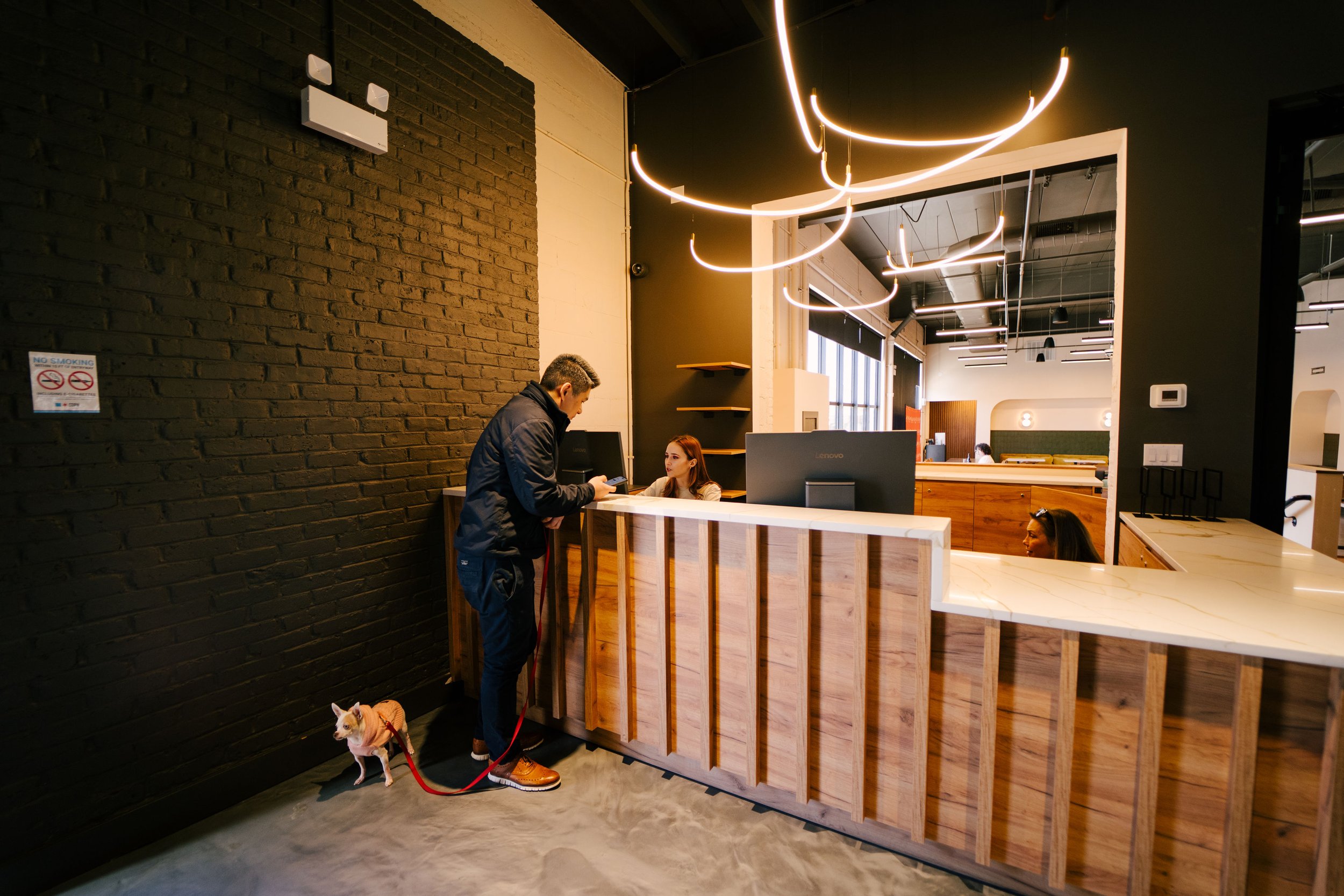
One of the clearest differentiators between hospitality-driven dog parks and true private dog clubs is the role of behavioral screening and structured access.
Unmanaged environments introduce variability in dog behavior, owner responsibility, and supervision. In open-access settings, unfamiliar dogs interact in high-stimulation environments without standardized evaluation or consistent oversight. This increases the likelihood of stress responses, conflict escalation, and inconsistent owner accountability. Research examining dog park design and management strategies has shown that insufficient supervision, unclear behavioral norms, and overcrowding are common sources of conflict in public off-leash environments — reinforcing the importance of structured management systems in dog social spaces..
By contrast, clubs that require vaccination records, temperament assessments, and supervised play create more predictable group dynamics and safer social environments. Standardized entry criteria reduce uncertainty, allow staff to proactively manage interactions, and establish shared behavioral expectations among members.
By requiring a Social Test & Temperament Assessment during the first visit, Pup Social directly addresses one of the most common safety gaps in the category — the absence of a consistent behavioral evaluation process before dogs enter shared off-leash environments. This approach reinforces accountability, supports safer group formation, and strengthens long-term community trust.
Urban Real Estate and Regulatory Constraints
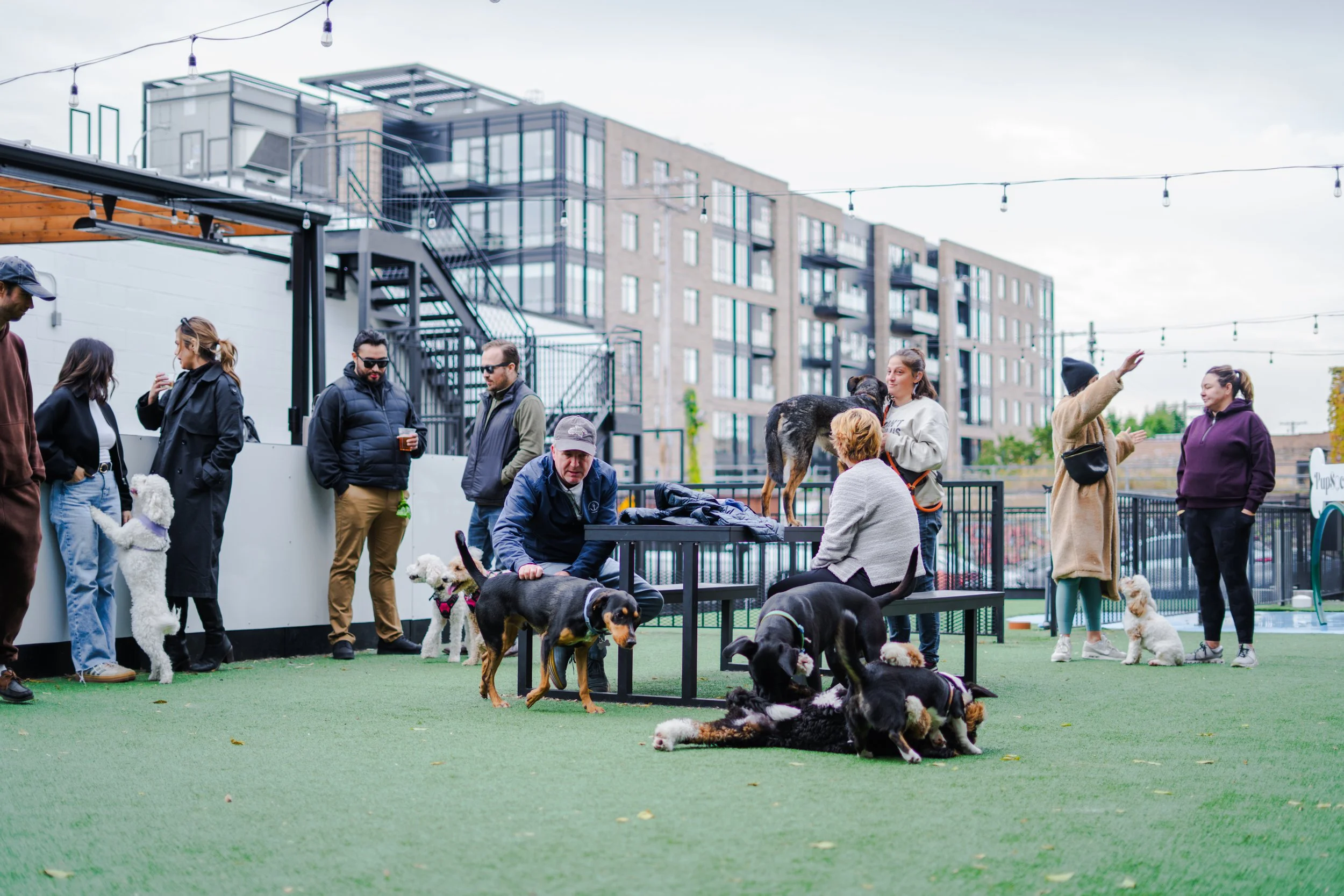
Urban dog ownership has risen sharply, even as access to suitable outdoor space has declined.
A cross-sectional study published in BMJ Open by Zijlema et al. found that dog owners are more physically active than non-dog owners, but that these benefits are highly dependent on access to natural outdoor environments. In dense urban areas—where green space is limited, fragmented, or overcrowded—opportunities for consistent dog exercise and socialization are significantly constrained.
As cities densify, dog owners increasingly face:
· No private yards
· Overcrowded or poorly managed public parks
· High-rise housing with limited pet amenities
Private dog clubs address this infrastructure gap by offering dedicated, purpose-built environments that provide reliable access to off-leash play and enrichment—services public spaces often cannot deliver at scale.
Community, Belonging, and Conflict Management
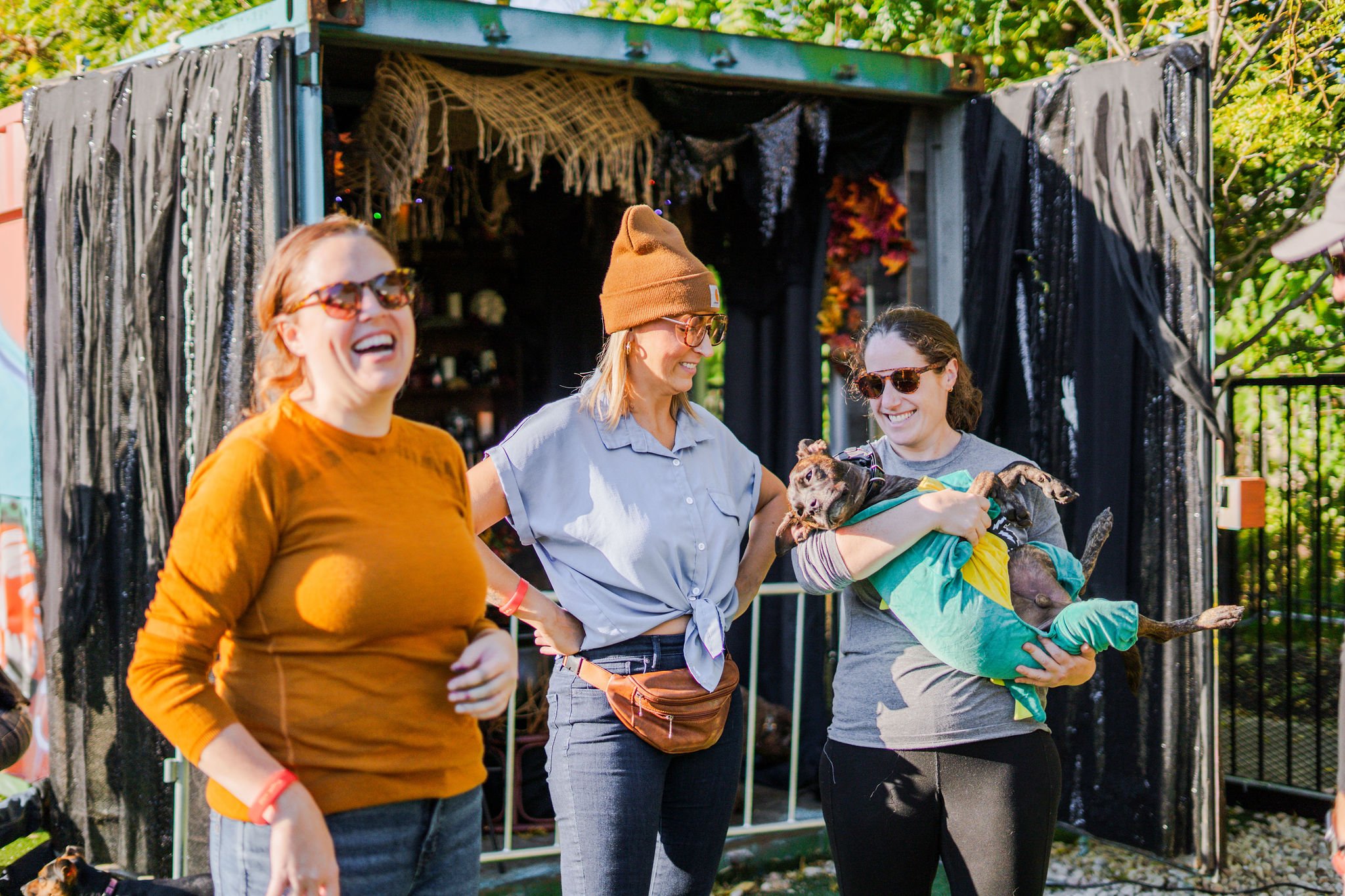
Beyond physical exercise, dog-oriented spaces play a significant role in social interaction, community formation, and conflict.
A systematic review examining dog park design and management strategies by Chen et al. (Benefits and Conflicts: A Systematic Review of Dog Park Design and Management Strategies) found that while dog parks can foster social connection and repeat interaction among owners, they also frequently generate conflict, safety concerns, and stress-related incidents when design and management are inadequate.
The review identifies common sources of conflict, including:
Lack of supervision and rule enforcement
Overcrowding and incompatible dog groupings
Ambiguous behavioral norms and owner accountability
Crucially, Chen et al. emphasize that management strategies—not merely the presence of open space—determine whether dog-oriented environments promote community or conflict. Spaces with clear rules, monitoring, and intentional design were associated with more positive social outcomes and fewer negative encounters.
Private dog clubs operationalize these findings by formalizing what public parks often lack:
Consistent oversight and enforcement
Controlled group sizes and compatibility standards
Shared norms that reduce ambiguity and friction
In doing so, they transform dog socialization from a high-variance public interaction into a predictable, community-oriented experience.
Expansion, Funding & Market Confidence
The private dog club category is attracting increasing operational momentum and capital interest, moving beyond early pilots toward multi-city scalability.
For example, DOG PPL, one of the first high-end canine social clubs, has announced expansion beyond Los Angeles. In mid‑2024, pet‑industry investment fund Ani.VC made its first strategic investment into DOG PPL to support new location growth, including a forthcoming New York club alongside its Santa Monica flagship — publicly signaling institutional confidence in behavior‑first private dog club models.
On the hospitality‑hybrid front, Skiptown has formalized national expansion efforts, adding new executive leadership and investor backing to support multi‑city development. With existing corporate locations in several U.S. markets, Skiptown is positioning itself for broader rollout in high‑density pet‑care markets..
Together, these expansion activities demonstrate that private dog clubs are transitioning from single‑location experiments into repeatable urban business platforms.
Investor Appeal
Private dog clubs sit at the intersection of four high‑growth sectors:
· Pet services
· Hospitality and leisure
· Wellness and lifestyle
· Community‑oriented real estate
This hybrid positioning makes them attractive to investors seeking experience‑driven consumer brands with recurring revenue potential. At the same time, the model remains operationally complex — requiring expertise across animal care, hospitality, facilities management, and community‑building. Operators that successfully balance these layers are best positioned to scale sustainably.
The Future of Private Dog Clubs
Emerging Trends
Several trends are shaping the next evolution of private dog clubs:
Technology integration: Mobile apps, RFID access control, digital vaccination tracking, and data-driven scheduling are becoming standard infrastructure.
Higher baseline safety standards: Supervised group play, structured screening, and staff training are increasingly viewed as table stakes rather than premium add-ons.
Lifestyle blending: Work, wellness, and dog care are merging into single destinations.
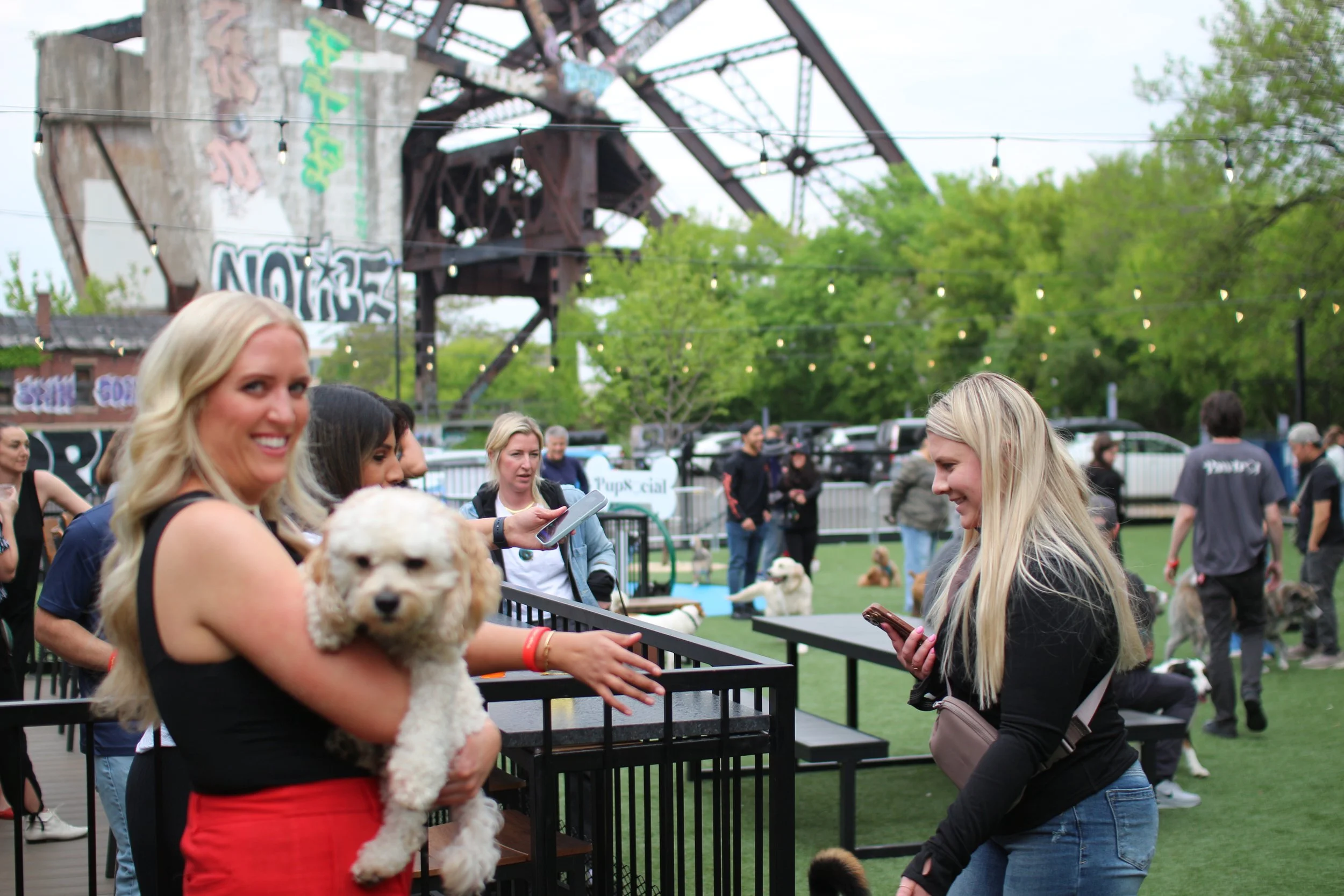
Some clubs — including integrated lifestyle concepts like Pup Social — demonstrate how coworking lounges, grooming, and human-focused spa services extend the category beyond dog play into a broader urban lifestyle offering.
Long-Term Outlook
As cities continue to densify and private outdoor space becomes scarcer, private dog clubs are likely to shift from novelty to infrastructure-level amenities in major urban markets. They fill a growing gap between public dog parks, traditional daycare, and hospitality venues — offering reliable access, safety, and community under one roof.
Conclusion: A Category That’s Here to Stay
Private dog clubs reflect a broader transformation in how people live with dogs. They are not a replacement for public parks or dog-friendly bars — but a response to modern constraints, safety concerns, and the desire for meaningful community.
As the category matures, success will depend less on aesthetics and more on execution, standards, and trust. What is clear is that private dog clubs are no longer an experiment — they are an established and evolving part of the modern urban landscape.